
May 26, 2026
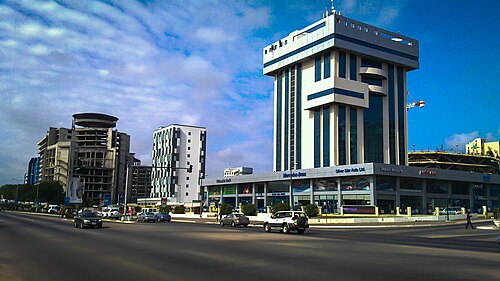
Airport Residential Area is Accra’s most sought-after address. In 2026, the case for buying here is stronger than ever. Five minutes from Kotoka International Airport, bordered by Grade-A offices and international hotels, this neighbourhood has long attracted diplomats, executives, and diaspora buyers.
Now land is limited. The development pipeline is changing. Rental yields are higher than in most similar African cities. This is making it a real investment hotspot.
Why Airport Residential Sits at the Top of Accra’s Value Ladder
The neighbourhood is one of Accra’s three most expensive districts by price per square metre. Prime residential units in 2026 trade at USD 1,400 to 1,800 per square metre. Two-bedroom apartments sell between USD 250,000 and USD 320,000. Three-bedroom units reach USD 300,000 to USD 400,000.
Returns are equally compelling:
- Long-term corporate leases produce gross yields of 7 to 9 percent, supported by expat tenants, airline crews, NGO staff, and diplomatic households.
- Professionally managed short-let units achieve gross yields of 19 to 22 percent, with occupancy above 78 percent driven by business travellers through Kotoka.
- Capital appreciation has averaged 8 to 10 percent annually, consistent with the broader prime Accra performance of 20 to 25 percent cumulative growth from 2020 to 2025.
Vacancy tells the most important story. Airport Residential reports vacancy rates of just 3 to 5 percent, compared to 8 to 12 percent in peripheral suburbs. Quality stock here fills fast.
The Demand Drivers That Keep This Market Tight
The airport proximity is the obvious advantage. A five-minute transfer to flights and boardrooms is a convenience no other Accra district can replicate.
Corporate and diplomatic leasing is structural. Multinational companies expanding West African headquarters, embassies, and international organisations all specify Airport Residential when relocating senior staff. These tenants pay in US dollars, sign multi-year leases, and renew reliably. That consistency is what makes this neighbourhood behave like a blue-chip asset.
The urban form reinforces values. This is a controlled high-end corridor. Luxury apartments, mixed-use schemes, and international hotels dominate. No industrial encroachment, no informal density creeping in. Residents’ associations are active, streets are maintained, and professional facility management keeps both tenants and buyers willing to pay a premium.
Top international schools, Marina Mall, Accra Mall, and the commercial hubs of Ridge and Osu are all within a short drive, completing the equation for the diplomatic families and executive renters who form the core tenant base.
Airport City 2.0: The Projects Powering the Next Growth Wave
The development pipeline is what elevates Airport Residential from a strong market to a genuine hotspot.
The wider Airport City corridor is the subject of approximately USD 2.6 billion in planned development. This is not speculative; the infrastructure, commercial, and hospitality investment reshaping the area is already visible on the ground. As that corridor becomes a full-scale business district, demand for residential property nearby will intensify.
Within the neighbourhood, new high-rise schemes are introducing rooftop pools, gyms, concierge services, co-working spaces, and backup power as standard. These buildings set a new benchmark for what executive tenants expect, pushing well-specified new units upward in value.
The land supply is finite. Airport Residential is built out. New supply arrives only through vertical redevelopment of existing plots. That structural scarcity is the most powerful long-term price driver in any urban market.
Why Airport Residential Deserves a Place in Your 2026 Portfolio
This market offers what few Accra addresses can: income and capital preservation in a single, liquid asset class.
Total return potential sits at 15 to 19 percent annually when you combine long-term corporate yields with capital appreciation. Entry prices are premium, but the investor who holds five to ten years is buying into a market where vacancy is structurally low, tenant quality is high, and the development pipeline is building momentum.
Diaspora buyers benefit from dollar-denominated rents and contracts, providing a natural hedge against cedi movements. That is a key reason Ghanaians in the US, UK, and Europe continue to direct capital here.
Deiterra is redefining luxury living and investment in Airport Residential Area. To explore the family-focused designs and secure your residence, call +233 501 622 422 or visit landmarkhomesgh.com to book a private tour.
Frequently Asked Questions
Is Airport Residential already too expensive to deliver good returns?
Entry prices are premium, but the yield and appreciation data justify the cost. Corporate and diplomatic tenants pay in US dollars, and vacancy sits at 3 to 5 percent. For investors holding five years or more, total returns of 15 to 19 percent annually are well supported by current market performance.
How do returns in Airport Residential compare to East Legon or Cantonments?
Long-term yields in Airport Residential sit at 7 to 9 percent gross, slightly below East Legon’s 9 to 10 percent but above Cantonments at roughly 6 to 8 percent. Capital appreciation is broadly similar across all three prime neighbourhoods. Airport Residential differentiates itself on tenant quality and vacancy stability.
What types of units perform best here?
Serviced one and two-bedroom apartments produce the strongest short-let yields given corporate travel demand. Three and four-bedroom units command premium long-term leases from families and senior executives. Studios are viable but face more competition from hotel stock in the corridor.
Will the Airport City development pipeline cause oversupply?
Structural land scarcity works against oversupply. New residential units arrive only through plot redevelopment, not new land releases. The USD 2.6 billion commercial and hospitality pipeline in Airport City will generate additional demand for residential stock rather than compete with it.
How do I start exploring opportunities in Airport Residential with Landmark Homes GH?
Contact the Landmark Homes team directly at +233 501 622 422 or visit landmarkhomesgh.com. The team provides current pricing data, project assessments, and personalised guidance for both local and diaspora buyers.