
July 2, 2026
You want to buy property in Ghana, but you live in London, Toronto, or Maryland, and the distance feels like a wall. Here is the good news. Ghanaian law lets you own a home or an investment back home without booking a flight every month. Thousands of diaspora buyers do this each year, sending billions of dollars into Ghana’s property market. You need the right process and the right people on the ground.
This guide breaks down the rules and the steps so you can buy with confidence.
Who owns what in Ghana
Ghana sorts buyers into two groups, and the difference shapes your purchase.
Hold Ghanaian citizenship, including diaspora citizens with dual nationality, and you acquire residential leaseholds of up to 99 years.
Hold only a foreign passport, and the 1992 Constitution treats you as a non-citizen. Article 266 caps your interest at a 50-year leasehold, renewable, while you fully own the building on the land. The Land Act 2020 restates the same rule.
Here is a myth worth killing. People say foreigners own nothing in Ghana. The truth is simpler. Foreigners own apartments and houses through registered 50-year leaseholds, with the structure fully in their name.
One detail trips up returnees. A Ghanaian by birth who took foreign citizenship without dual status falls under the foreigner rule for land. Confirm your status before you sign anything.
The legal process to buy property in Ghana from abroad
Work through these steps in order.
Set your goal first.
A retirement home, rental income, and capital growth each point you toward different properties and different neighbourhoods. Airport Residential, Cantonments, East Legon, and Labone suit different buyers. Airport Residential draws steady rental demand from diplomats and executives, which rewards income-focused owners.
Build your local team.
You need a licensed agent or developer, a Ghanaian property lawyer, and a surveyor for land or houses. The lawyer is non-negotiable. Land disputes fill roughly 80% of cases in Ghana’s high courts, so cutting this corner puts your money at risk.
Shortlist remotely.
Use developer websites and trusted portals. Ask for live video tours on WhatsApp or Zoom, drone footage, and an independent inspection. Drop any listing with no clear address, a price far below market, or a seller who dodges a video call.
Run due diligence.
Your lawyer conducts a title search at the Lands Commission. The search confirms the true owner and flags disputes, caveats, and double sales. For an estate, your lawyer checks the developer’s title, building permit, and planning approval. Photocopies and a relative’s word protect no one.
Sign proper contracts.
You need a Sales and Purchase Agreement covering price, payment schedule, handover date, and remedies if the seller defaults. You also need a lease or Deed of Assignment, plus a registered Power of Attorney if someone signs for you in Accra.
Pay through traceable channels.
Send funds to the developer’s registered company account or a lawyer’s client account. Avoid cash and personal mobile money numbers. Keep every SWIFT confirmation and receipt.
Register your ownership.
Your lawyer registers the transfer at the Lands Commission, pays stamp duty, and secures your Land Title Certificate. Skip registration, and you stay open to future claims.
Risks diaspora buyers face and how to beat them
Three traps catch overseas buyers most often.
Double sales happen when one plot goes to several people. A title search shuts the door on it.
Abandoned projects swallow off-plan deposits. Pick a developer with completed buildings and tie your payments to construction milestones.
Family mismanagement turns a favour into a feud. Lean on licensed professionals and a clear Power of Attorney, not trust alone.
Your Ghana purchase, sorted
You buy property in Ghana from abroad with confidence when you follow the law, vet your team, and register your title. Prime Accra locations have delivered rental yields near 8% to 10%, which suits patient overseas owners.
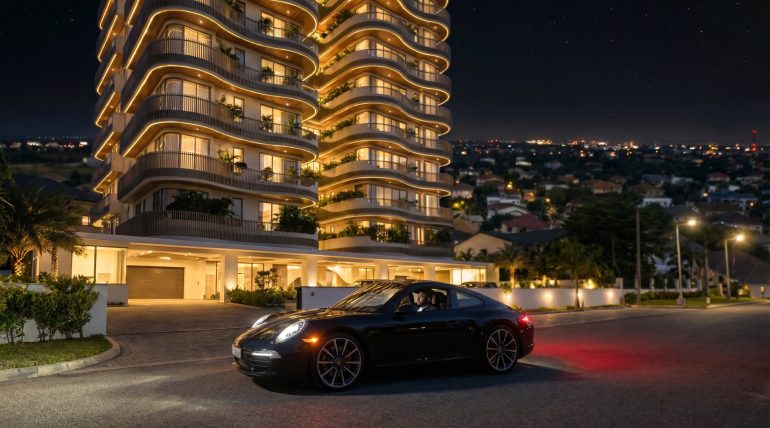
At Landmark Homes Ghana, our newest development, Deiterra, brings 140 apartments to Airport Residential Area. It spans two towers, with homes from studios to penthouses. Owners enjoy a rooftop pool, a gym, and an executive lounge.
Our in-house Prive management team looks after your home.
It is built for owners who live overseas.
Frequently asked questions
Do you need to fly to Ghana to buy property?
No. You complete the whole purchase from abroad with a Ghanaian lawyer and a registered Power of Attorney. Your lawyer runs the title search, signs on your instruction, and registers the title in your name.
Will a relative sign for you with a Power of Attorney?
Yes. A properly drafted, notarised, and registered Power of Attorney lets a trusted person act for you in Ghana. Keep the powers narrow and specific, and have your own lawyer draft the document.
How long does registration take at the Lands Commission?
Timelines vary by region and title type. A clean title with complete documents moves faster, often a few months, while disputed or unregistered land takes much longer. Your lawyer should give you a realistic estimate before you pay.
Is an apartment from a developer safer than family land?
For most diaspora buyers, yes. A reputable developer gives you a verified title, permits, and a single point of accountability. Family land carries a higher risk of multiple claims and unclear boundaries, so it demands deeper due diligence.
What tax do you pay on rental income from Ghana?
Residential rent carries an 8% rent income tax on gross rent, payable to the Ghana Revenue Authority. Non-residents should confirm their exact position with a tax advisor, since higher rates apply to some non-resident landlords. Keep every receipt for your records.
Ready to own a piece of Accra?
Living abroad does not stop you from owning a home in Ghana. Talk to the Landmark Homes Ghana team about Deiterra in Airport Residential Area. Book a live video viewing. Ask for a diaspora buyer walkthrough, from title search to registration.
Call or WhatsApp +233 501 622 422 Visit landmarkhomesgh.com